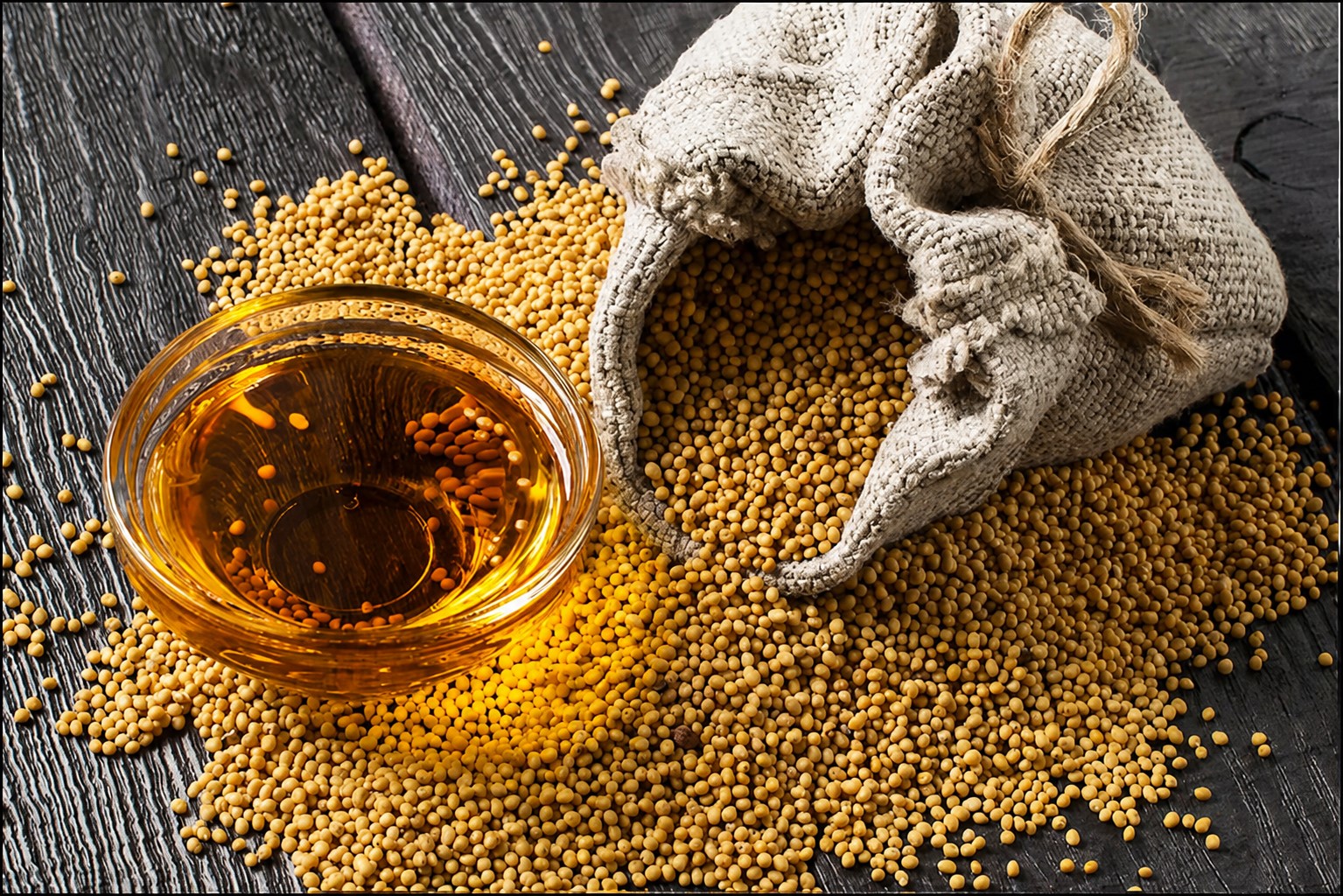
Cold-pressed mustard oil is mechanically extracted from mustard seeds without solvent extraction, while refined oils undergo additional purification and deodorization steps. Mustard oil is rich in unsaturated fats, including MUFA and ALA, and is commonly reported to have a smoke point around 250°C. However, fatty-acid composition varies by seed and processing.
When choosing cooking oil, the question is no longer simply about whether an oil is “refined” or “cold pressed.” The more useful comparison is what happens during extraction, what fatty acids the oil contains, how it behaves during cooking, and what current evidence actually says about cardiovascular health.
This is particularly relevant for Indian kitchens, where mustard oil is traditionally used for tadka, curries, frying, pickling and other high-temperature cooking methods.
Health note: Mustard oil can be part of a balanced diet, but no cooking oil can independently prevent, treat or reverse heart disease. Individual dietary needs differ, particularly for people with cardiovascular disease or other medical conditions.
Extraction Methods Defined: Cold Pressing vs. Chemical Refining
The first major difference between kachi ghani mustard oil and refined oil is the way the oil is obtained and subsequently processed.
Traditional Kachi Ghani Mechanical Extraction
Kachi Ghani refers to mustard oil obtained through mechanical pressing of mustard seeds. Instead of relying on solvent extraction followed by extensive refining, the oil is physically expressed from the seed.
The term is not simply a marketing phrase in India's food regulations. FSSAI's standards state that mustard oil may be labelled “Kachi Ghani” or “Cold Pressed” when the natural allyl isothiocyanate content is at least 0.20% by weight. FSSAI also specifies that expelled-pressed mustard oil should be free from hexane residues. [1]
This is important because the characteristic pungency of mustard oil comes largely from mustard-derived compounds associated with its glucosinolate chemistry and the formation of isothiocyanates.
Cold pressing can therefore retain more of the oil's characteristic aroma, colour and naturally occurring minor compounds than a heavily refined product. However, “cold pressed” should not automatically be interpreted as nutritionally superior in every measurable category. Nutrient retention depends on the seed, extraction conditions, filtration, storage and subsequent handling.
High-Heat Solvent Extraction and Deodorization in Refined Oils
Refining is a broader category of processing rather than a single extraction method.
Industrial edible-oil production can involve steps such as extraction, degumming, neutralization, bleaching and deodorization. Solvent extraction can improve oil recovery from seeds, while refining removes unwanted compounds and helps produce an oil with a neutral flavour, lighter appearance and greater consistency.
FSSAI's standards specifically state that mustard oil obtained by solvent extraction for human consumption must be supplied after refining and must comply with the relevant standards. The regulation also specifies a maximum residual hexane level of 5.0 ppm for refined solvent-extracted oil, while expelled-pressed oil must be free from hexane residues.
This gives us an important distinction:
Cold pressed and refined describe processing characteristics, while mustard, sunflower, soybean, rice bran and other names describe the oil source.
Therefore, saying “cold pressed oil is always better than refined oil” is scientifically too broad. A meaningful comparison requires identifying the specific oils being compared.
Fatty Acid Profile & Heart Health
The nutritional profile of a cooking oil depends largely on its fatty acids.
Mustard oil is notable because it contains substantial amounts of monounsaturated fatty acids (MUFA), polyunsaturated fatty acids (PUFA), alpha-linolenic acid (ALA) and erucic acid.
A commonly cited composition for mustard oil is approximately:
| Fatty-acid category | Reported value in mustard oil |
| Monounsaturated fatty acids (MUFA) | ~60% |
| Polyunsaturated fatty acids (PUFA) | ~21% |
| Saturated fatty acids (SFA) | ~12% |
| Erucic acid | ~42% |
| Oleic acid | ~12% |
| Alpha-linolenic acid (ALA, omega-3) | ~6% |
| Linoleic acid (omega-6) | ~15% |
These figures are reported in Indian technical material and nutrition references, but individual mustard oils can differ considerably according to cultivar and origin.
For example, a 2026 scientific review reported a mustard-oil profile of approximately 59% MUFA, 32% PUFA and 8% saturated fat for a particular dataset, illustrating why one fixed fatty-acid table should not be treated as a universal specification for every bottle of mustard oil. [2]
The Critical Omega-6 to Omega-3 Ratio (2:1)
The omega-6 to omega-3 ratio is one of the most discussed features of mustard oil.
Using the commonly cited values of approximately 15% linoleic acid and 6% ALA, the ratio is approximately 2.5:1, which is close to the often-quoted ~2:1 figure.
Another nutritional database reports approximately 15.33 g omega-6 and 5.90 g omega-3 per 100 g mustard oil, producing an omega-6 to omega-3 ratio of about 2.6:1.
Therefore, for accuracy, “approximately 2:1” should be presented as a rounded characteristic of commonly reported mustard-oil composition, not as an FSSAI or WHO-prescribed ideal ratio for mustard oil.
The frequently repeated “300:1 sunflower oil” comparison should also be handled carefully. Sunflower oil is generally much higher in linoleic acid and much lower in ALA than mustard oil, but the exact ratio varies with sunflower variety, including conventional versus high-oleic varieties. It should not be presented as a universal fixed clinical value.
What matters from a cardiovascular perspective is the overall dietary pattern and what saturated fats are replaced with. WHO recommends that dietary fat should predominantly come from unsaturated fatty acids and recommends limiting saturated and trans fats.
Monounsaturated Fats (MUFA) and Cholesterol Balance
Mustard oil contains a substantial proportion of MUFA.
Oleic acid is one of the better-known MUFAs, while mustard oil also contains longer-chain MUFAs such as erucic acid. This is where the mustard-oil discussion becomes more complicated than simply saying “high MUFA equals heart healthy.”
WHO's dietary guidance supports replacing saturated fats with unsaturated fats, including plant-derived MUFA and PUFA, as part of a healthy dietary pattern.
However, mustard oil contains significant erucic acid, so its cardiovascular discussion cannot be reduced to its total MUFA percentage.
Mustard Oil and Cardiovascular Health: What Does the Evidence Say?

The controversy surrounding mustard oil comes primarily from erucic acid.
Older animal research associated high-erucic-acid diets with myocardial lipidosis in rodents. These findings contributed to restrictions on mustard oil in the United States. A peer-reviewed review published in the Journal of Clinical Lipidology explains that the FDA position differs from approaches in the European Union, Australia and New Zealand, where limits on erucic-acid exposure have been established rather than a complete ban on mustard oil.
The same review notes that mustard oil is widely consumed in South Asia and that the Lipid Association of India has considered it a heart-healthy cooking oil, while also acknowledging the controversy surrounding erucic acid.
There is also human clinical research that has reported potentially beneficial cardiovascular outcomes. For example, a randomized trial involving patients with suspected acute myocardial infarction found fewer total cardiac events in the mustard-oil intervention group compared with placebo over one year. However, the study does not establish that mustard oil prevents or treats cardiovascular disease in the general population.
More recent research continues to examine the biological effects of erucic acid, meaning the subject should not be presented as completely settled.
Bottom line: mustard oil's unsaturated-fat profile is nutritionally relevant, but calling it a guaranteed heart-protective oil would go beyond the evidence.
Cooking Performance: Smoke Point & Thermal Stability
One of the biggest practical reasons Indian consumers choose mustard oil is cooking performance.
Why 250°C Smoke Point Makes Mustard Oil Ideal for High-Heat Frying
A smoke point is the approximate temperature at which an oil begins producing visible smoke. It is influenced by oil composition, free fatty acids, impurities, storage and processing.
A 250°C (482°F) smoke point is commonly reported for mustard oil in Indian cooking references and commercial cold-pressed mustard-oil specifications.
This makes the 250°C figure useful as a reported reference point, but it should not be described as an official FSSAI standard for all mustard oils.
For practical cooking, deep frying generally occurs below the 250°C range. Therefore, an oil with a reported smoke point around 250°C can provide a substantial temperature margin during high-heat cooking.
However, smoke point alone does not determine oxidative stability.
The fatty-acid composition matters too. Highly unsaturated oils can behave differently during prolonged heating, and repeated heating can generate oxidation products.
This means the better question is not:
“Which oil has the highest smoke point?”
It is:
“Does this oil have an appropriate smoke point, fatty-acid profile and cooking stability for the intended cooking method?”
Is Kachi Ghani Mustard Oil Safe for High-Heat Deep Frying Compared to Refined Sunflower Oil?
Yes, mustard oil can be used for high-temperature cooking when it is a food-grade product that meets applicable standards, but smoke point alone does not establish that it is healthier than refined sunflower oil.
Mustard oil is commonly reported around 250°C, while sunflower oil varies substantially depending on its type and processing.
WHO, meanwhile, recommends limiting fried foods and emphasizes the quality of dietary fat rather than declaring one cooking oil universally superior.
For deep frying, also avoid repeatedly heating the same oil. Repeated heating can promote oxidation and other degradation reactions.
So, if the goal is high-heat Indian cooking, Bail Kolhu 100% Cold Pressed Kachi Ghani Mustard Oil can be positioned around its traditional culinary use, distinctive flavour and reported high smoke point, rather than making an unsupported claim that cold pressing alone makes it chemically more heat-stable than every refined oil.
Addressing the Erucic Acid Debate with Modern Science
Erucic acid is the most important safety consideration when discussing mustard oil.
Mustard oil can contain substantial amounts of erucic acid, a long-chain monounsaturated fatty acid. Older animal studies raised concerns about myocardial lipidosis, which contributed to regulatory restrictions in some countries.
Importantly, mustard-oil composition is not identical across all cultivars.
Research has found significant variation in erucic-acid levels between mustard-oil samples. One study analysing commercial mustard oils found erucic acid ranging widely across samples, reinforcing the importance of seed variety and product specifications.
FSSAI also distinguishes conventional mustard oil from low-erucic-acid rapeseed/mustard oil. Its standards define low-erucic-acid oil as containing no more than 2% erucic acid as a percentage of total fatty acids.
The scientifically defensible position is that erucic acid has raised safety concerns, particularly from animal evidence, and regulatory approaches differ internationally. Consumers should use compliant food-grade products and follow appropriate dietary guidance.
Flavor, Aroma, and Antimicrobial Benefits
The appeal of kachi ghani mustard oil is not purely nutritional.
Its strong aroma and characteristic pungency are part of the traditional cooking profile of North, East and Central India.
The Role of Allyl Isothiocyanates in Food Safety
Mustard's characteristic pungency is strongly associated with allyl isothiocyanate (AITC).
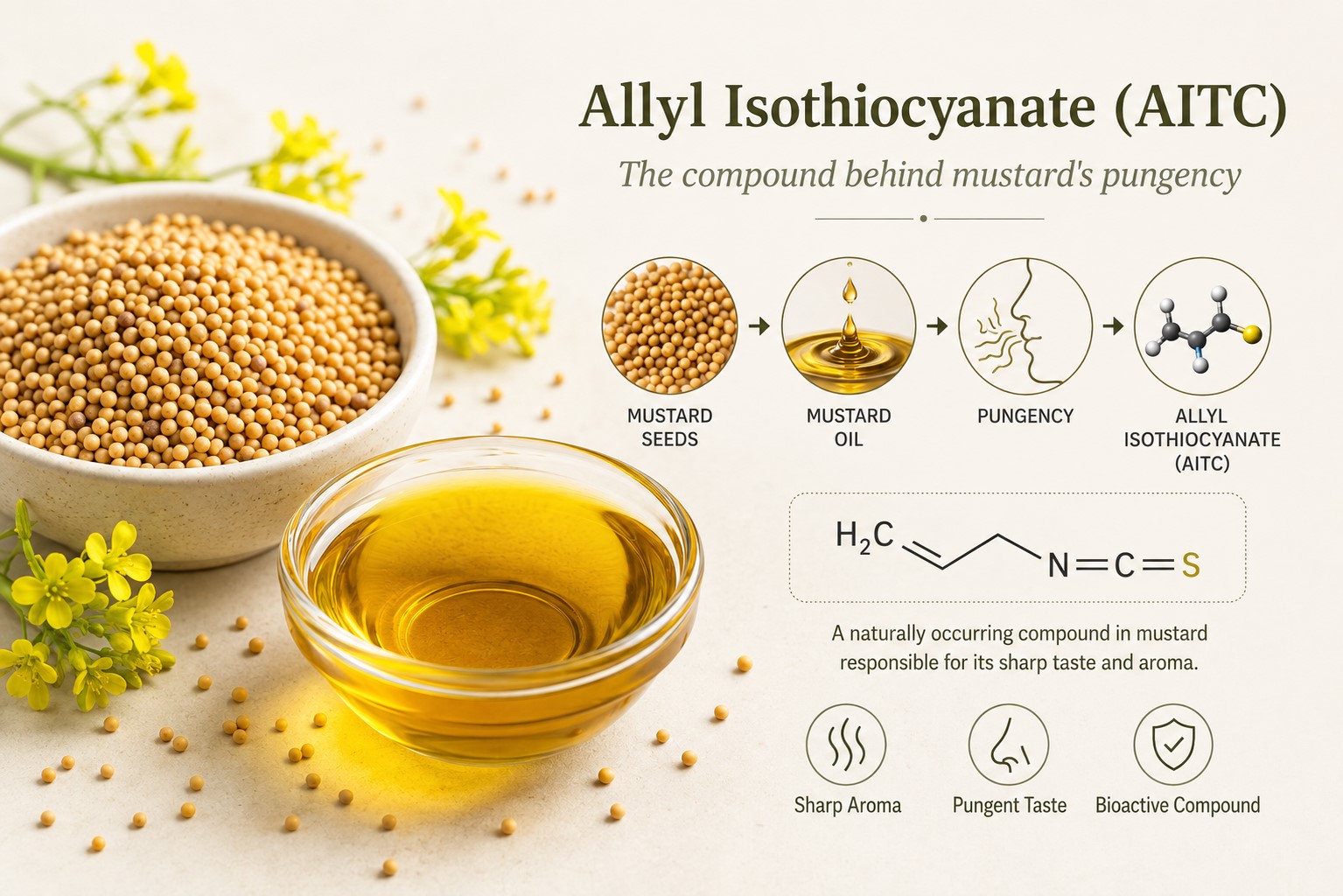
Mustard seeds contain glucosinolates that, when the seed tissue is disrupted, can participate in enzymatic reactions that produce isothiocyanates. AITC is one of the compounds associated with mustard's sharp aroma and flavour.
FSSAI specifically uses natural allyl isothiocyanate as part of the regulatory definition for mustard oil labelled Kachi Ghani or Cold Pressed, requiring not less than 0.20% by weight under the applicable standard.
Laboratory research has investigated isothiocyanates for antimicrobial activity. However, this should not be translated into a consumer claim that mustard oil “kills harmful bacteria in the body” or prevents infections.
In food, its practical value is primarily its distinctive flavour and traditional culinary identity.
Cold Pressed Mustard Oil vs Refined Oil: At-a-Glance
| Parameter | Cold Pressed Kachi Ghani Mustard Oil | Refined Edible Oil |
| Primary extraction | Mechanical pressing | May involve solvent extraction and/or mechanical extraction followed by refining |
| Solvent extraction | Not required for expelled-pressed oil | May be used depending on oil and manufacturing process |
| Refining | Not subjected to conventional refining | Refined through additional processing |
| Natural aroma | Generally more pronounced | Usually more neutral |
| Characteristic mustard pungency | Retained | Can be reduced through processing |
| Natural allyl isothiocyanate | Relevant to Kachi Ghani standard | Depends on product/process |
| MUFA | High in commonly reported mustard-oil profiles | Depends on the source oil |
| PUFA | Present | Depends on the source oil |
| Omega-6:Omega-3 | Commonly reported around ~2:1 to 2.6:1 | Depends entirely on the oil |
| Reported mustard-oil smoke point | ~250°C | Depends on the specific refined oil |
| Erucic acid | Can be substantial in conventional mustard oil | Depends on oil and specification |
| Best comparison method | Evaluate seed, processing and composition | Evaluate the specific refined oil, not “refined oil” as one category |
How Does the Omega Fatty Acid Profile in Cold Pressed Mustard Oil Support Cardiovascular Wellness?
The key point is that mustard oil provides a substantial proportion of unsaturated fatty acids, including MUFA and PUFA, as well as ALA.
WHO recommends that dietary fat should primarily come from unsaturated fatty acids and that saturated fat should be limited to no more than 10% of total energy intake for adults.
However, cardiovascular health depends on the entire dietary pattern, including total fat intake, saturated fat, trans fat, fibre, physical activity, body weight and other risk factors.
Therefore, mustard oil can contribute unsaturated fats to the diet, but it should not be marketed as a treatment or cure for cardiovascular disease.
Can We Use Cold Pressed Mustard Oil for Daily Cooking?
For consumers who enjoy mustard oil, it can be used as part of everyday cooking when the product is food-grade and compliant with applicable standards.
Its strong flavour makes it particularly suitable for:
Tadka and tempering
Indian curries
Stir-frying
Regional vegetable preparations
Fish and meat preparations
Selected deep-fried foods
The amount of oil matters too. Even unsaturated oils are energy-dense, so using more oil does not automatically make a meal healthier.
For people with diagnosed cardiovascular disease, lipid disorders or other medical conditions, individual dietary recommendations should come from a qualified healthcare professional.
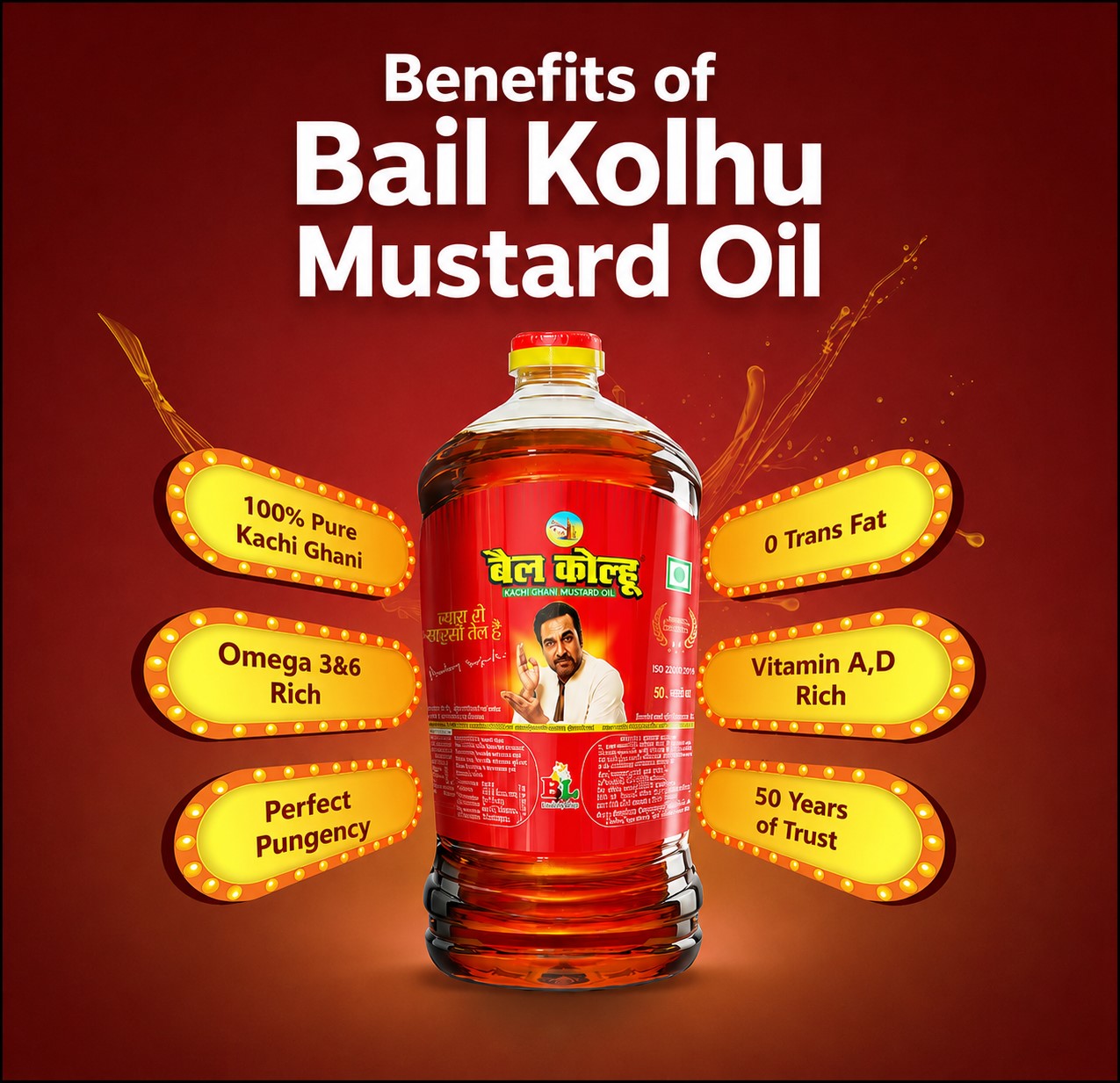
Why Choose Bail Kolhu 100% Cold Pressed Kachi Ghani Mustard Oil?
For consumers specifically looking for the traditional mustard-oil profile, Bail Kolhu 100% Cold Pressed Kachi Ghani Mustard Oil aligns directly with the cold-pressed category discussed in this guide.
If you prefer the traditional aroma and flavour of mechanically pressed mustard oil, explore Bail Kolhu 100% Cold Pressed Kachi Ghani Mustard Oil in 1L, 2L and 5L sizes.
Buy Bail Kolhu Kachi Ghani Mustard Oil
Available sizes: 1L | 2L | 5L
Frequently Asked Questions (FAQ)
Is cold pressed mustard oil healthier than refined oil?
Not automatically. Cold pressing and refining describe processing methods, while the nutritional profile depends on the specific oil. Mustard oil provides substantial unsaturated fats, but its erucic-acid content also requires consideration.
Is kachi ghani mustard oil safe for high heat deep frying compared to refined sunflower oil?
Mustard oil is commonly reported to have a smoke point around 250°C, making it suitable for high-temperature cooking. However, smoke point alone does not prove superior health or oxidative stability compared with refined sunflower oil.
What is the smoke point of mustard oil?
A smoke point of approximately 250°C (482°F) is commonly reported for mustard oil. This is a reference value rather than an FSSAI specification applicable to every mustard-oil product.
What is the omega-3 to omega-6 ratio in mustard oil?
Commonly reported mustard-oil data indicate approximately 6% ALA omega-3 and 15% linoleic omega-6, giving an omega-6 to omega-3 ratio of about 2.5:1, often rounded to approximately 2:1. Actual values vary by oil.
Does mustard oil contain erucic acid?
Yes. Conventional mustard oil can contain substantial erucic acid. The amount varies according to mustard variety and other factors. FSSAI separately defines low-erucic-acid rapeseed/mustard oil as containing no more than 2% erucic acid.
Is mustard oil good for heart health?
Mustard oil contains predominantly unsaturated fats, which is relevant to healthy dietary-fat patterns. However, evidence on mustard oil specifically is more complicated because of its erucic-acid content. It should not be described as a treatment or cure for heart disease.
What makes Kachi Ghani mustard oil different?
Kachi Ghani mustard oil is mechanically expressed, and FSSAI permits the terms “Kachi Ghani” or “Cold Pressed” when the oil meets the specified natural allyl-isothiocyanate criterion.
Can cold pressed mustard oil be used for daily cooking?
Yes, a compliant food-grade mustard oil can be used in everyday cooking. Choose the quantity and cooking method according to your dietary needs, and avoid repeatedly overheating cooking oil.
Does cold pressed mustard oil contain omega-3?
Yes. Mustard oil contains alpha-linolenic acid (ALA), an omega-3 fatty acid. Commonly cited composition data place ALA around 6%, although the actual level can vary between mustard oils.
Is refined oil always unhealthy?
No. “Refined” describes processing and does not automatically mean unhealthy. The fatty-acid composition, degree of processing, intended cooking method and overall dietary pattern all matter.
Final Thought: Cold Pressed Mustard Oil vs Refined Oil
The best choice depends on what you are comparing.
Cold pressed Kachi Ghani mustard oil offers a traditional, strongly flavoured mustard-oil profile with substantial unsaturated fats and naturally occurring mustard compounds. A smoke point around 250°C is commonly reported, making it versatile for Indian cooking.
But the scientific evidence does not support the blanket statement that every cold pressed oil is healthier than every refined oil.
For cardiovascular wellness, WHO's broader recommendation is more important: emphasize unsaturated fats, limit saturated and trans fats, and consider the overall quality of the diet.
Mustard oil deserves a more nuanced assessment because of its erucic-acid content and the continuing scientific and regulatory discussion surrounding it. The responsible approach is therefore to recognize both sides of the evidence rather than presenting mustard oil as either completely harmful or universally heart-protective.
For consumers who prefer the traditional taste and aroma of Kachi Ghani mustard oil, Bail Kolhu 100% Cold Pressed Kachi Ghani Mustard Oil provides a relevant product option in 1L, 2L and 5L sizes.


